Vehicle manufacturer to use simulation for development and testing of headlight systems
KTM reduces reliance on real-world night driving during initial development, saving cost and time
rFpro introduces significant “night driving” update to further improve correlation and realism
Hampshire, UK, 2nd March 2026 Vehicle manufacturer KTM is using rFpro’s simulation software to develop, test and evaluate headlight systems across its product range, enabling the company to assess complex lighting behaviour earlier in the vehicle development process.
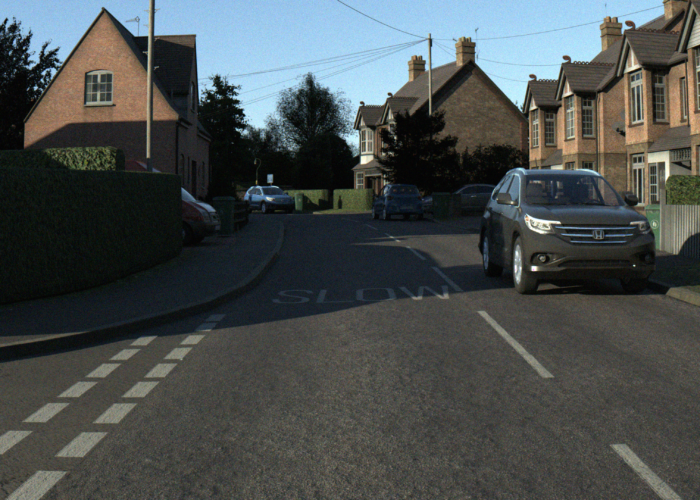
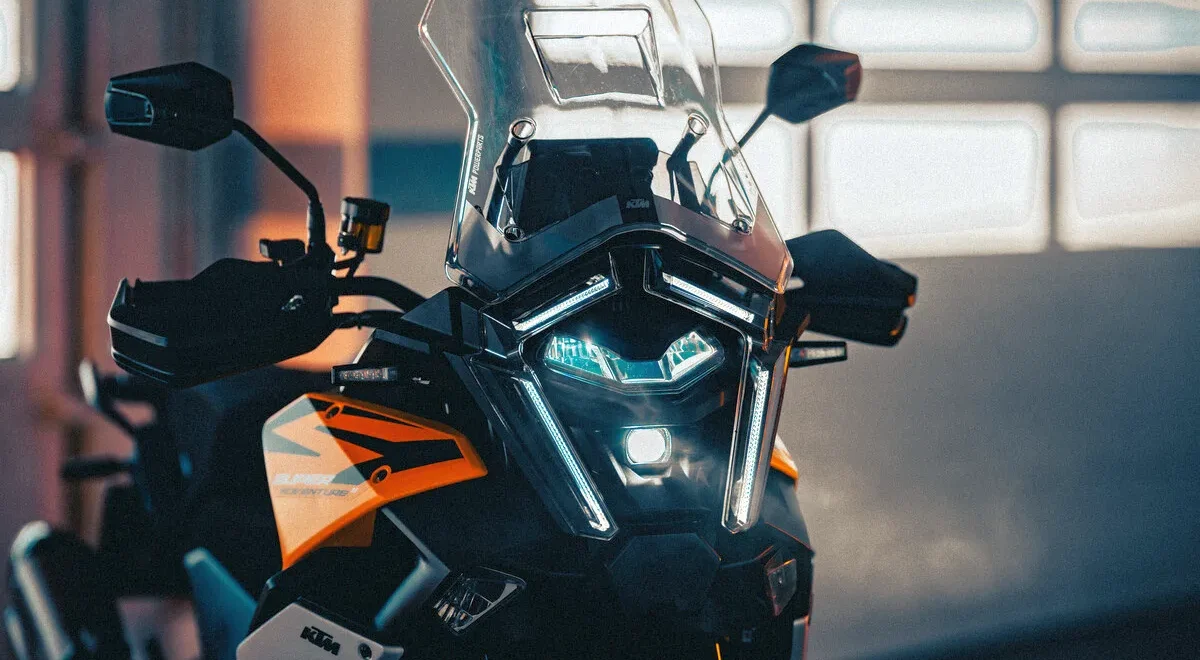
KTM is using rFpro’s engineering-grade virtual environment during the pre-development phase to support the design and optimisation of headlights, including beam throw, brightness and functional behaviour. The approach allows engineers to review headlight performance in a highly realistic simulation before physical prototypes are available.
By shifting more of the headlight development process into simulation, KTM reduces its reliance on real-world night driving, which is time-consuming, costly and often constrained by safety and environmental factors. This issue is pronounced for motorcycles where the rider is exposed to the elements and winter testing can be unsafe.
“Advanced headlight systems must perform consistently across a wide range of riding conditions,” said Philipp Schweiger, Optical Engineer R&D, at KTM. “Simulation allows us to evaluate light distribution, dynamics and rider perception much earlier in development. The strong correlation we see between virtual and physical testing gives us confidence in using simulation as part of our overall validation strategy.”
“Motorcycle headlight systems are becoming increasingly sophisticated, particularly as adaptive and matrix technologies move into production,” said Nick Harrison, Development Director at rFpro. “The combination of complex vehicle dynamics and advanced control software makes early development and validation essential. rFpro enables manufacturers like KTM to evaluate both the subjective rider experience and the underlying engineering performance long before physical testing would traditionally begin, saving significant time and cost.”
Designing headlights for motorcycles presents unique challenges compared with passenger cars, particularly due to vehicle lean angle during cornering. This makes masking out oncoming traffic with high beams challenging, placing greater demands on both hardware design and control strategies. With the increasing adoption of adaptive LED and matrix-style headlights on motorcycles, systems must also account for lean angle, pitch and dynamic movement, alongside inputs from cameras and multi-axis inertial measurement units.
Engineers can review headlight performance both statically and dynamically, taking into account full vehicle dynamics, including pitch, roll and lean. rFpro’s road surface model is accurate to 1cm in the horizontal and 1mm in the vertical, enabling vehicle dynamics to be accurately simulated.
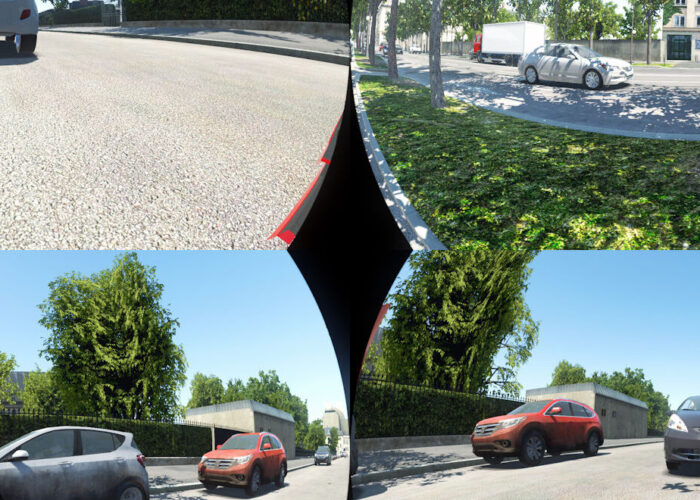
KTM’s development team uses a desktop-based simulator with virtual reality headsets to experience rFpro’s simulation environment and assess headlight performance from the rider’s perspective. The headsets are equipped with eye-tracking technology, allowing engineers to see precisely where users are looking when discussing potential improvements or changes.
The KTM team use a digital twin of a public road near its factory in Mattinghofen in Austria to conduct its testing. The model was built by rFpro using LiDAR scan data. It enables the team to easily migrate from simulation to the real world to correlate data.
rFpro has also released a significant “Night Driving” update, a major software enhancement designed to increase the realism of light simulation. A key feature of this update is the introduction of physically accurate retroreflectivity.
In the simulation, every material is assigned accurate physical definitions. When headlight beams strike road infrastructure, such as cat’s eyes, traffic signs, or road markings, the light reflects exactly as it would in the real world back to the rider. The update also includes a High Definition lighting mode, which improves the calculation of light behaviour to deliver higher fidelity simulation data.
About rFpro
rFpro, a member of the AB Dynamics Group plc, provides a simulation environment for the automotive and motorsport industries. It is used for the development and testing of autonomous vehicles, ADAS, vehicle dynamics and human factor studies. rFpro’s automotive customers are the world’s largest car manufacturers, tier one suppliers and sensor developers. We enable them to simulate, test and validate new sensors, control systems and vehicle hardware systems. The top ten OEMs that were early adopters of rFpro technology have already launched road cars which started their development, not on a test track, but in a rFpro’s virtual environment.
In motorsport we are the market leader of professional driver-in-the-loop simulator software – our customers include past and present champions of every leading motorsport category. We maintain the largest library of digital circuit models (digital twins) including race circuits for F1, NASCAR, WEC, IMSA, Indy, Formula E, Super-GT and Australian V8 Supercars. rFpro’s vision is for every driving simulator experiment to be conducted using the rFpro engineering-focused simulation engine. On every driving simulator, local or cloud-based, rFpro will form a fundamental part of vehicle development.
Press Contact
Richard Doherty at Automotive Technology PR
+44 (0)7814 961855
Richard.doherty@autotechpr.com