rFpro announced as a consortium partner in two projects
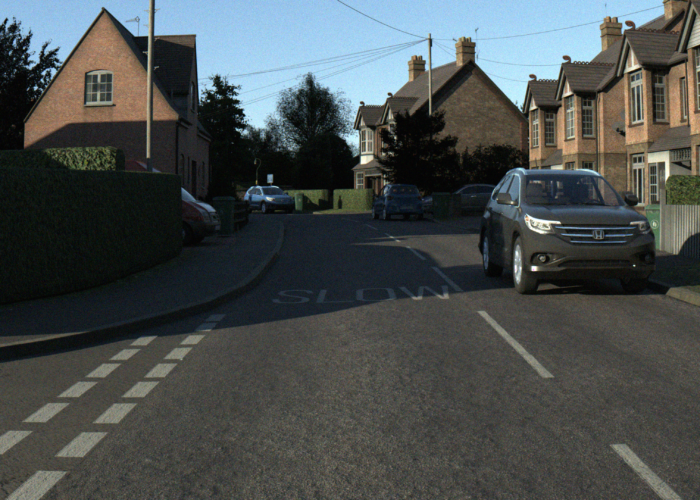
Sim4CAMSens aims to enable accurate representation of Automated Driving System (ADS) sensors in simulation
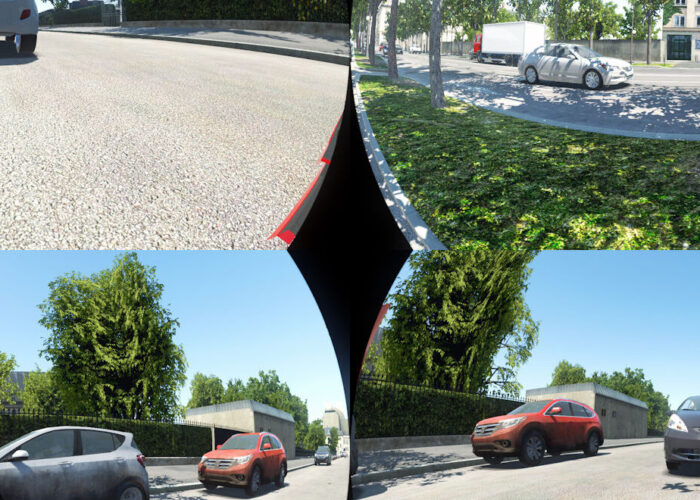
DeepSafe aims to generate the synthetic training data needed for the next stage in the commercialisation and deployment of self-driving vehicles
rFpro has been announced as a consortium partner in two government-funded projects aimed at strengthening the UK’s connected and automated mobility supply chain.
The £18.5m funding comes from the Centre for Connected and Autonomous Vehicles (CCAV) “Commercialising Connected and Automated Mobility: Supply Chain” (CCAMSC) competition. It is spread across 13 projects and involves 43 British companies developing self-driving technologies, products and services ready for the connected and automated mobility (CAM) market.
CCAV has awarded a £2 million grant to the Sim4CAMSens project, which will be led by Claytex and a group of industry-leading partners. The consortium consists of Claytex, rFpro, Syselek, Oxford RF, WMG, National Physical Laboratory, Compound Semiconductor Applications Catapult, and AESIN.
The project aims to enable accurate representation of Automated Driving System (ADS) sensors in simulation. It will develop a sensor evaluation framework that spans modelling, simulation and physical testing. The project will involve the creation of new sensor models, improved noise models, new material models and new test methods to allow ADS and sensor developers to accelerate their development.
A further £2m has been awarded to a second project, DeepSafe. Led by dRISK.ai, the DeepSafe consortium including DG Cities, Imperial College London, Claytex and rFpro will unlock a barrier to the commercialisation and deployment of self-driving vehicles. Together, the partners will develop the simulation-based training needed to train autonomous vehicles (AVs) to handle ‘edge cases’, the rare, unexpected driving scenarios that AVs must be prepared to encounter on the road.
DeepSafe will commercialise ‘sensor real’ edge case data – a simulation of what an actual sensor would detect – together with AV training tools, for release in the UK and internationally after the project.
As well as advancing self-driving systems, the grants aim to support innovation in industry, job creation and investment, building the capacity to develop AV technology in the UK and export it to the rest of the world.
The Commercialising CAM programme is funded by CCAV, a joint unit between the Department for Business and Trade (DBT) and the Department for Transport (DfT), and delivered in partnership with Innovate UK and Zenzic.
The £18.5m CCAMSC competition was launched in October 2022 to support the deployment of self-driving vehicles by strengthening the capabilities of the sovereign UK CAM supply chain and is part of the Government’s vision for self-driving vehicles: Connected and Automated Mobility 2025: Realising the Benefits of Self-Driving Vehicles.